
In this article, Kewtech highlights a further potentially lethal Touch Voltage risk. This time, however, it is associated with Thermosetting plastics!

What is Phenolic Breakdown?
Back in the late ’60s through the early ’90s, phenolic resin, a thermosetting plastic, was the go-to material for electrical accessories. When new, they form a strong, heat-resistant and stable barrier that prevents electrical arcing and protects users from live parts. Fast forward a few decades, and those same components could be hiding a serious hazard.
Phenolic materials don’t always age gracefully. Over time, heat from loose connections or overloaded circuits can cause them to crack, become brittle, and even carbonise. And carbonised phenolic can become conductive. That means what was once a safety barrier can turn into a live path for electricity.
Although most installations will have been upgraded since the early 90’s, the area that remains is the DNO intake “cut-outs”. These older units can be identified by their dark brown/black colour. Which in some cases can become live due to this condition.
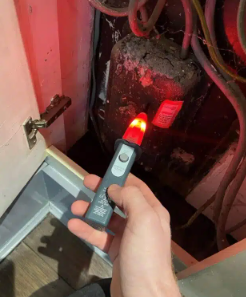
Lawrence AKA ‘Bristol Sparky’…“I wasn’t aware of phenolic breakdown, and now it’s one of the first things I check before I go sticking my hands anywhere near anything, cut out or even a board if there is suspicion, I use my KT1700 contact voltage pen before I go and touch anything.”
Click here to view his example video of Phenolic breakdown here.
Why Is Phenolic Breakdown Dangerous?
The risks associated with phenolic breakdown are significant:
Electrical Arcing: Carbonised or cracked phenolic components can allow arcing between conductors or between live parts and earth. Arcing generates heat and can rapidly escalate into fire.
Loss of Insulation: The deteriorated material may allow electricity to escape its intended path, potentially energising metal enclosures or exposed parts. This presents a risk of electric shock.
Component Failure: Switchgear, fuse carriers, and terminal housings may fail mechanically, preventing safe isolation, secure connections, or correct operation of protective devices.
Increased Fire Hazard: Overheated and carbonised phenolic components can act as ignition points. Many electrical fires in older installations have been linked to degraded phenolic materials.
For these reasons, you must remain alert for signs of phenolic breakdown, such as scorching, cracking, a burnt smell, or brittle components, particularly when inspecting or testing older installations.
Helping to Identify Phenolic Breakdown
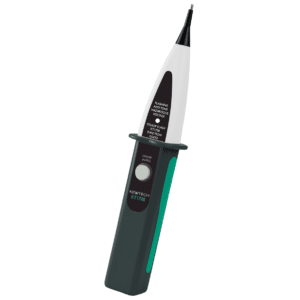
While phenolic breakdown is a physical condition best detected visually, electrical test instruments such as the KT1700 from Kewtech can reveal symptoms of the underlying problem.
The KT1700 is a single-pole contact voltage tester designed to give a first-level indication of dangerous live voltage (AC voltages between 50 V and 600 V) on conductive surfaces or metalwork.
Why This Matters for Phenolic Breakdown
Although the KT1700 doesn’t tell you directly that phenolic plastic has degraded, it does help identify some of the electrical symptoms that often accompany phenolic breakdown:
Detecting Unexpected Voltage on the Phenolic Materials
When phenolic components carbonise or crack, nearby metalwork (like enclosure backs, screws, earth bonds and other conductive parts) can become energised through leakage or arcing.
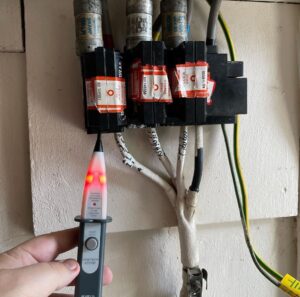
Using the KT1700, you can safely make contact with those metal parts to check if voltage is present before touching, acting as a first-line warning of irregular conductivity in the board or surrounding hardware.
Remember, ‘Test Before you Touch’!
The KT1700 provides a critical warning of the presence of lethal voltage, however, it does not provide a full diagnostic, and the correct safe isolation procedure should always be followed in any further investigation to verify that the circuit is dead.
Warning: It is imperative, and a legal requirement in the UK under the Electricity at Work Regulations (EAWR), that you follow correct safe isolation procedure to ensure that electrical equipment or circuits are completely de-energised before work begins.
Find out more about the correct Safe Isolation Procedure here…
Bottom line
Phenolic breakdown remains a common issue in ageing electrical systems and can pose serious risks if left undetected. Through a combination of visual inspection and professional testing tools such as Kewtech’s KT1700 single-pole tester, electricians can reliably identify deterioration and ensure installations remain safe and compliant.
The KT1700 helps you quickly and safely establish whether voltage is present or restored and supports (not replaces) your legally required safe isolation practices. It is, therefore, an excellent first-line safety tool that helps you spot unexpected surface voltage on metalwork and any phenolic plastic breakdown before you proceed. This makes subsequent, more detailed testing safer and more effective when investigating potential phenolic breakdown scenarios in older installations.
Remain vigilant – Test before you touch!
