Copper, the engine of modern electrification — from history to market and recycling: an ancient metal driving the global energy transition.

Copper is one of the pillars of modern industry and a key element supporting the energy transition. As a strategic material for electrical cables, digital infrastructure and electrification technologies, copper will continue to play a central role in the development of global economies.
An essential metal since the beginning
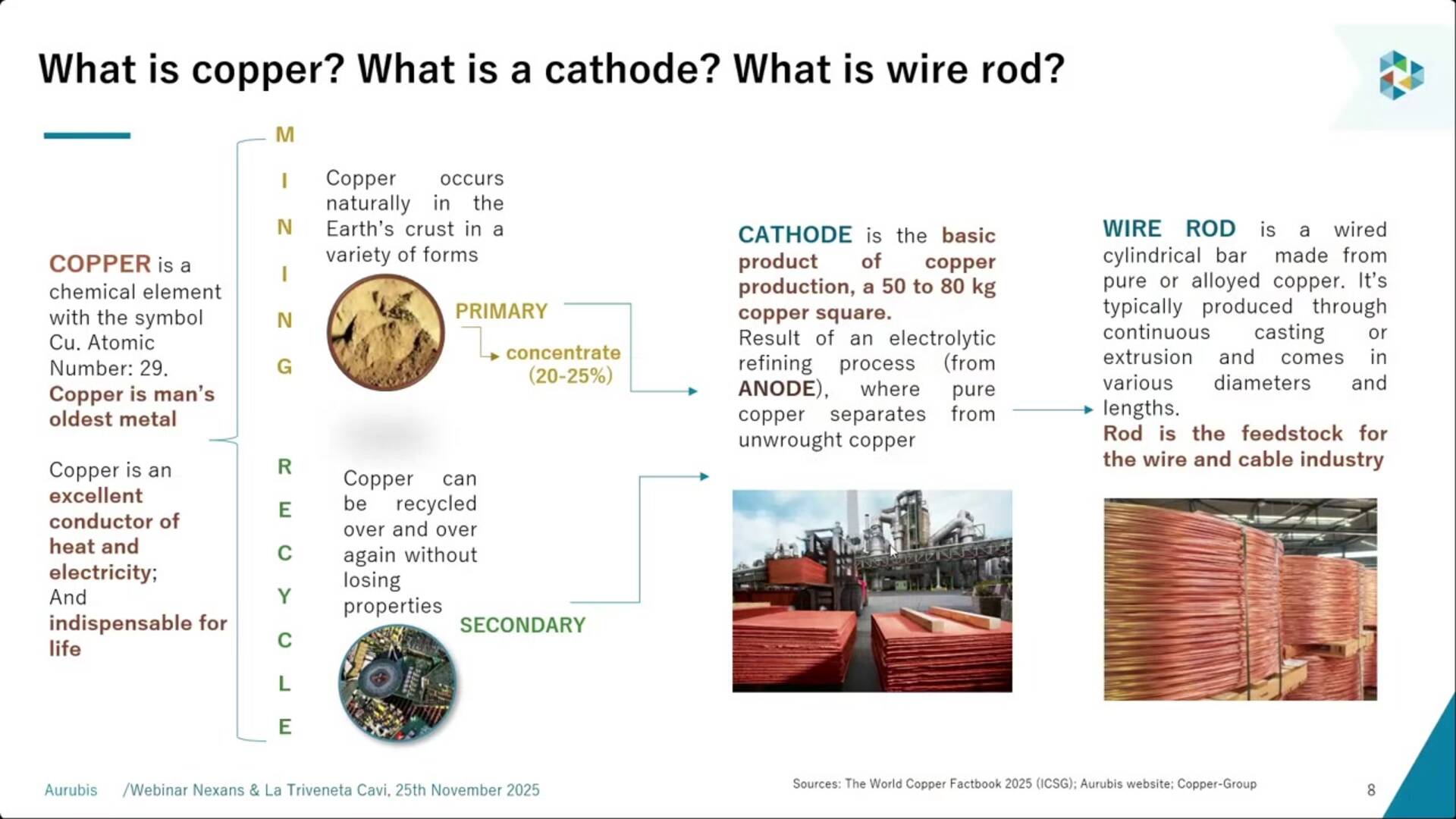
Found in the Earth’s crust and often combined with other elements, copper was one of the first metals used by humans at least 10,000 years ago. Thanks to its excellent electrical and thermal conductivity, it has become a critical material for the megatrends that are modernizing economies and nations.
From raw material to finished product
In nature, copper is typically found in ore deposits with a content of less than 1%. To obtain material with 99.99% purity, several complex processes of extraction, refining and processing are required.
Starting from ore — and increasingly from recycled copper scrap — producers obtain cathodes, the base product of the copper industry, with 99.99% purity. From cathodes, various semi-finished products are produced, including rod, the primary product from which the entire cable industry develops.
A global market under pressure
The number of producers capable of refining and processing copper ore or scrap is limited. As a result, the supply of copper in industrially usable forms (concentrate, cathode, rod) is restricted, despite the vast natural resources available.
Today, global cathode production is only slightly above total demand, while in regions such as North America and Europe, demand exceeds supply.
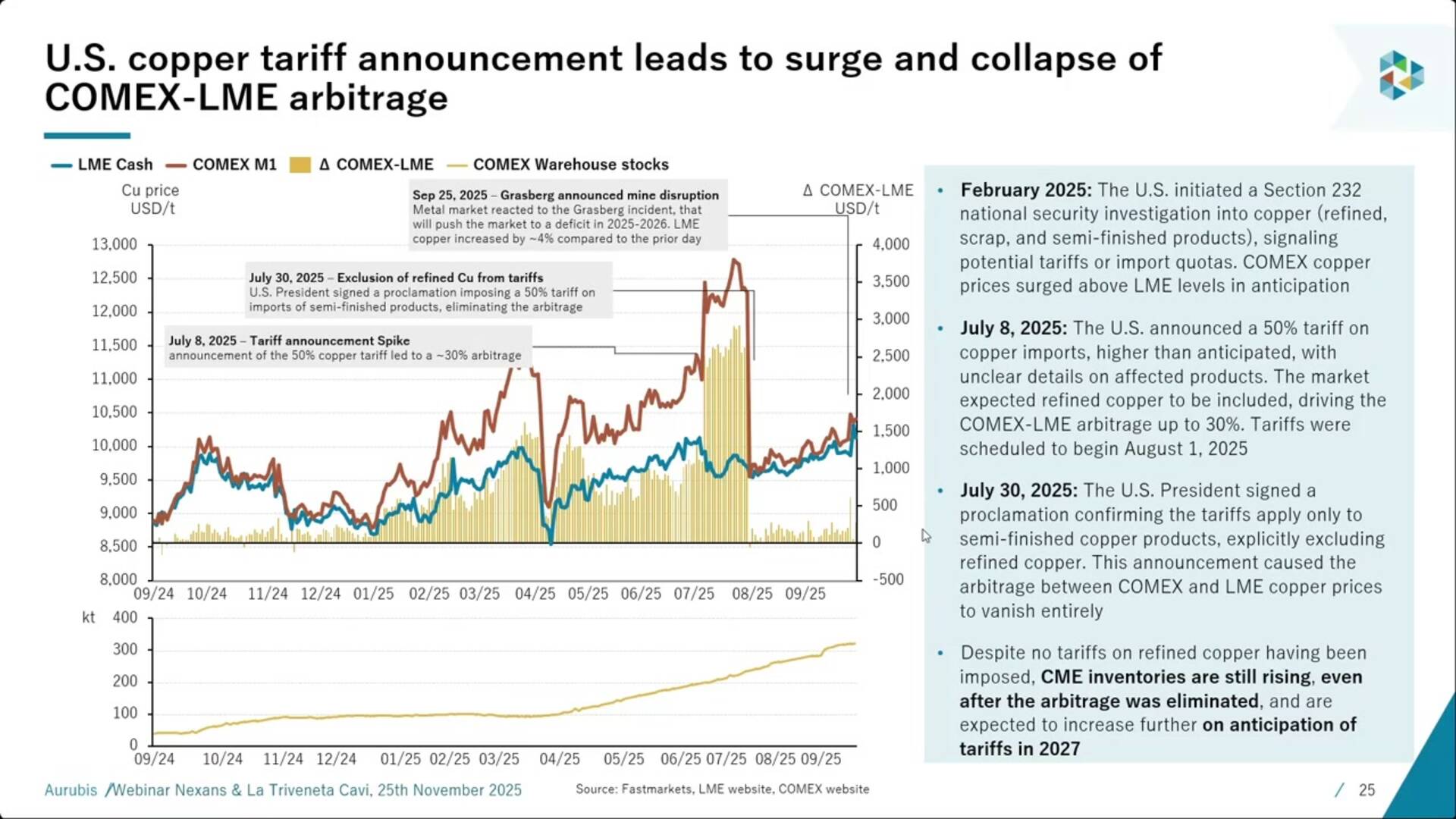
Any economic or geopolitical event can rapidly shift market dynamics. For example, the threat of tariffs in the United States and the LME–COMEX arbitrage caused a shortage of cathodes in Europe starting from Q2 2025, while U.S. inventories increased.
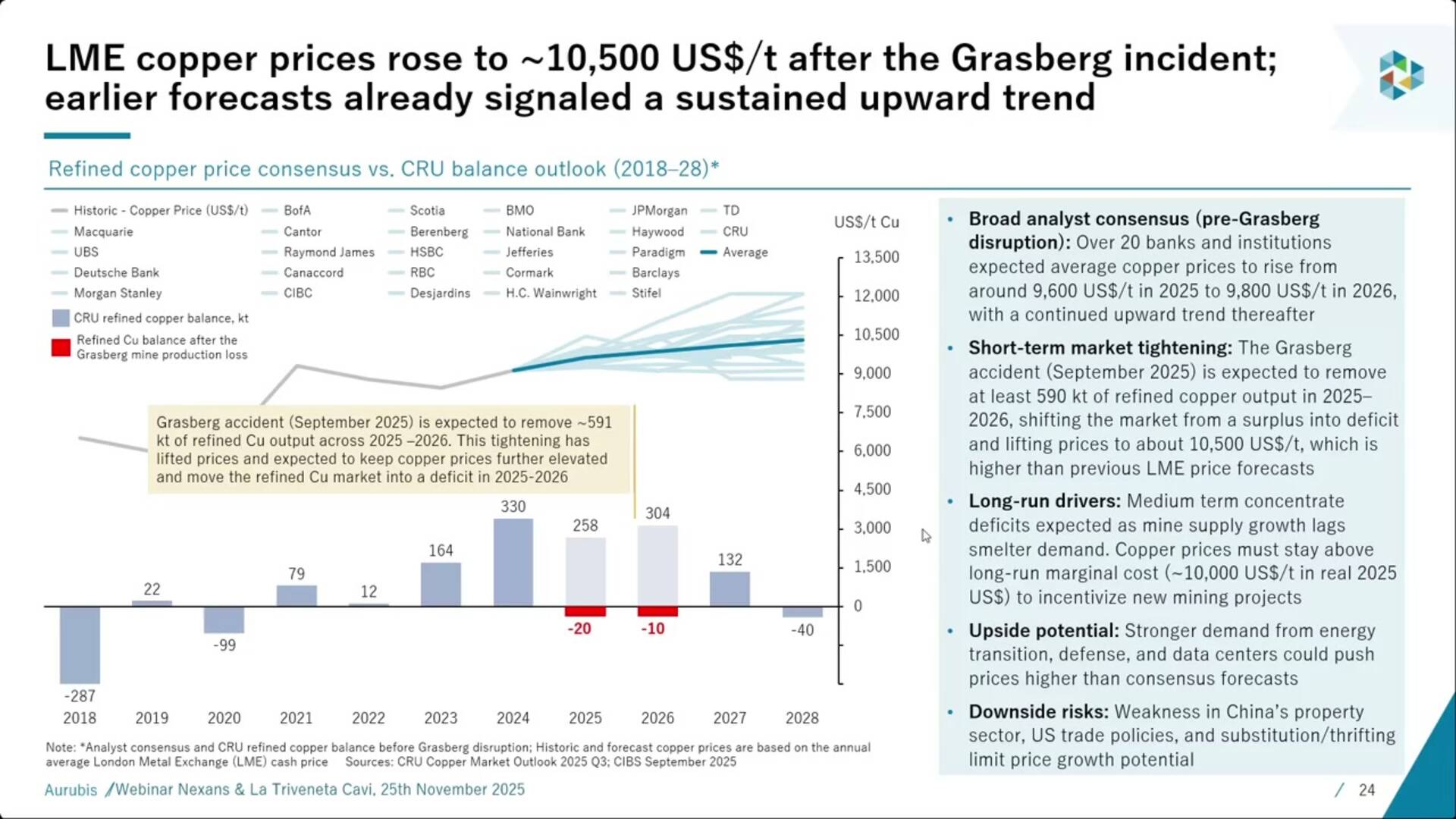
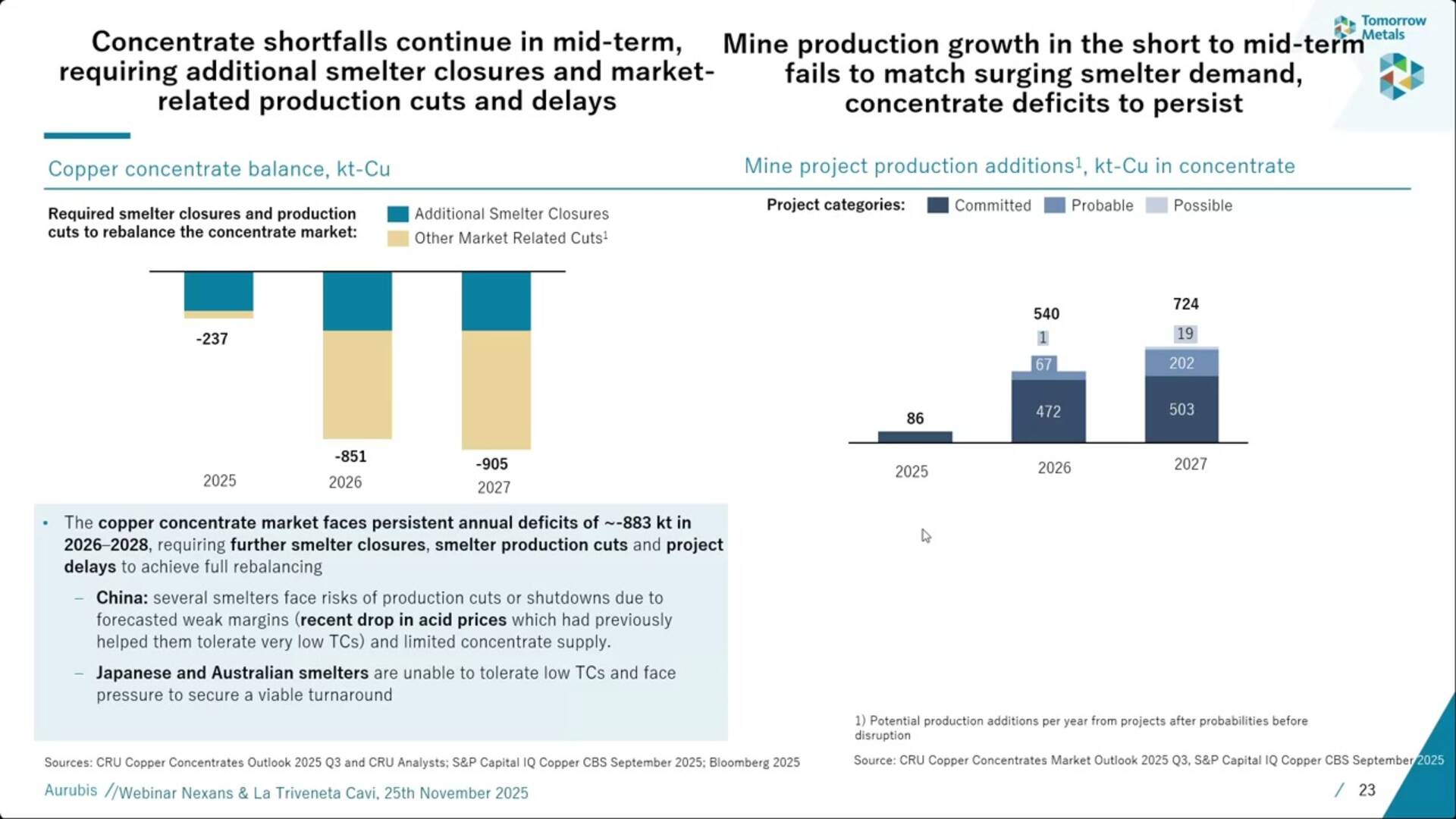
Limited mine supply, the anticipated closure of several smelters, and the rising demand driven by megatrends such as electrification, AI and the energy transition are expected to keep copper — in both concentrate and cathode form — in deficit at least until 2027.
Sustainability and recycling strategies
(Content indicated by client as not to be edited)
Nexans & Triveneta Strategy
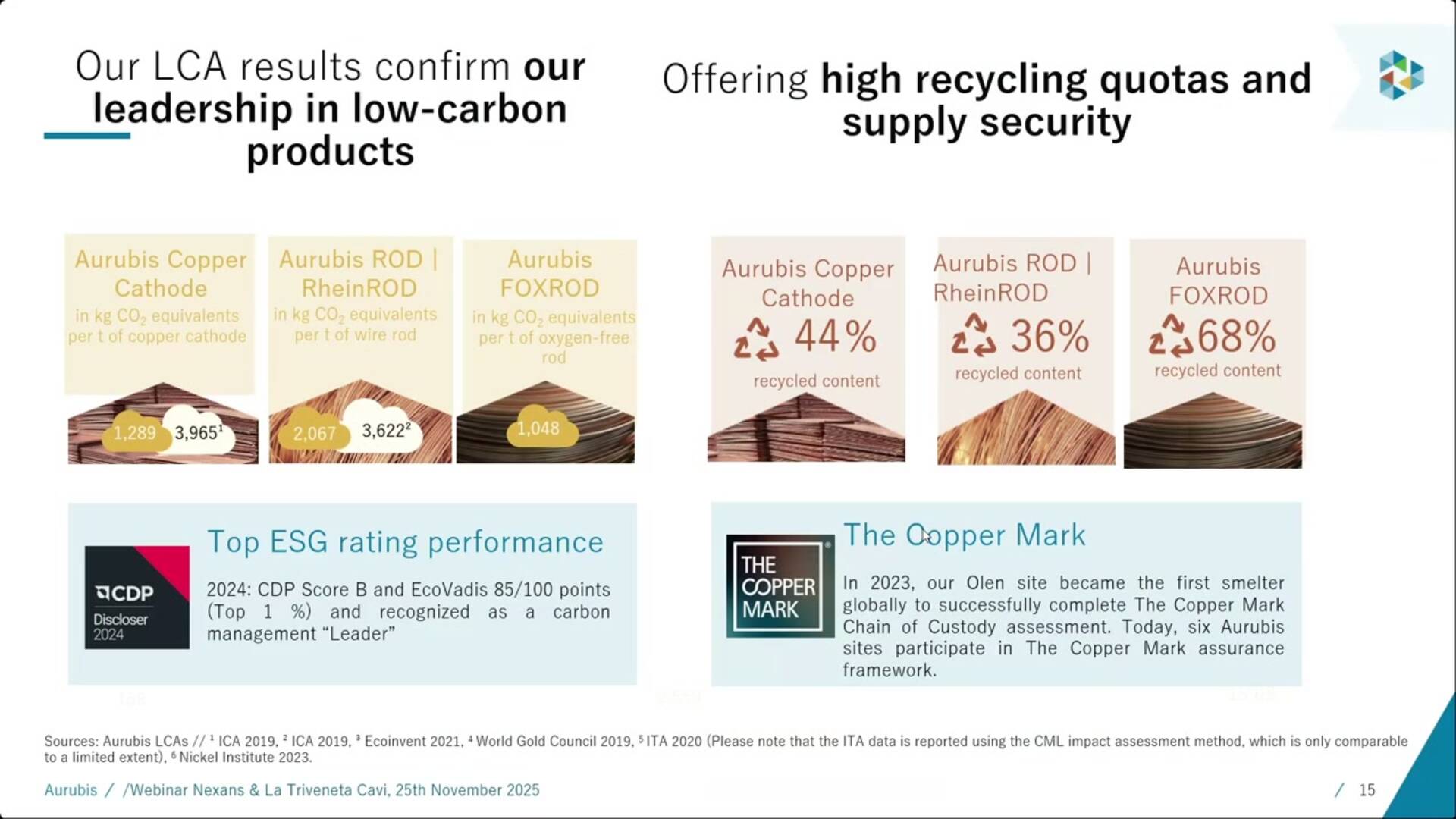
Nexans and Triveneta adopt sustainability strategies aimed at ensuring continuous production. The industry is active in recovering copper through advanced recycling processes.
European Recycling Strategy
Copper recycling is a central element for the European cable industry. Recycling provides a crucial resource to maintain a steady supply of material and reduce dependency on mining operations.