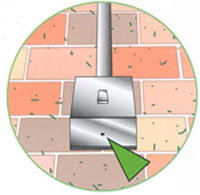
Drainage points may be needed in steel conduit systems

Internal corrosion can occur even in noinally dry situations, causing rapid deterioration and seriously affecting the function of the conduit as a protective conductor and as a means of mechanical protection.
Damp can affect steel conduit systems internally and externally and there are certain aspects of corrosion prevention which are sometimes overlooked.
Solution:
To deal with this problem the Regulations require the provision of drainage points for condensed moisture in conduit systems not intended to be gas-tight. (Regulations 522.3.1 and 522.3.2 refer).
Sustainable drainage outlets are often provided by drilling 5mm diameter holes at the lowest point in the underside of draw-in boxes, switch boxes, enclosed luminaires etc. Not only will this normally permit the condenstation to run out of the conduit system, but it will also usually allow circulation of air within the conduit, to permit drying out.
Conduit runs most susceptible to internal condensation are those subject to rapid temperature fluctuations, but it is good practice to provide suitable ventilation for all conduit systems whatever their location except for gas-tight or flameproof installations where no ventilation is permitted.
Regulation 522.3.1
A wiring system shall be selected and erected so that no damage is caused by condensation or ingress of water during installation, use andd maintenance. The completed wiring system shall comply with the IP degree of protection relevant to the particular location.
Regulation 522.3.2
Where water may collect or condensation may form in a wiring system, provision shall be made for its escape.