Voltimum UK Managing Editor James Hunt examines proposed changes to Part B (Fire Safety) of the Building Regulations 2000, and Approved Document B (AD B):

Some time ago, the UK Government (ODPM as it then was), provided a consultation paper on proposals for amending Part B (Fire Safety) of the Building Regulations 2000, and Approved Document B (AD B). Part B is still in the process of being finally amended and, therefore, the final document is not known. As an introduction, however, the following should give some idea of the sort of issues that will be addressed.
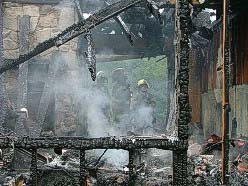
From 1983 to 1999 the total number of accidental building fires in England and Wales rose steadily by about 1% per year before leveling out to some extent recently. Over the period 1999 - 2002 there was an average of around 67,500 building fires / year of which about 69% were in dwellings. Over the past 20 years there has been a steady fall in fire fatalities, but this trend too is leveling out. From 1999 - 2002, the number of fatalities ranged from 290 to 370 / year with an average of about 335. Throughout this time the proportion of deaths that were in dwellings was about 95%. However, the number of non-fatal injuries in fires has risen substantially over the last 20 years - but again, 90% of injuries are recorded in dwellings. This is the background to proposed changes to Part B of the Building Regulations.
Building Regulations are a crucial part of delivery of the Government's strategy, in terms of designing in fire safety into new and altered buildings, alongside Community Fire Safety and the Reform of Fire Law.
Part B of the Building Regulations is concerned with fire safety, in particular:
- B1. To provide appropriate means of warning and escape.
- B2. To adequately resist internal fire spread (linings).
- B3. To adequately resist internal fire spread (structure).
- B4. To adequately resist external fire spread.
- B5. To provide reasonable access and facilities for the fire service.
Clearly, the first has implications for the electrical, lighting and fire alarm sectors. Electrical cable (and other electrical equipment), if faulty, is clearly a fire risk, and electrical cables also have to pass through walls, so potentially helping a fire to spread. The need and function of fire alarm and control systems doesn't need to be emphasised, but there are other issues now, including the use of heat hoods (for example) to prevent hot ceiling-mounted halogen downlighters setting fire to ceilings and ceiling voids.
AD B provides technical guidance on ways of demonstrating compliance with the requirements set out in Part B (Fire safety) of the Building Regulations 2000 as amended. The last major revision of AD B was published in January 2000; subsequently amended in 2002 to take account of the development and adoption of new European technical specifications, and supporting standards, that underpin the Construction Products Directive (CPD). However, this did not amend any of the existing technical guidance in the 2000 edition of AD B. A major review of the technical fire safety elements of the Building Regulations and AD B was announced in a Government White Paper in June 2003. The idea was to reduce the number and consequence of fires through more emphasis on a fire prevention and protection strategy. A particular target was for a 20% reduction in the number of accidental fire deaths in dwellings by 2010.
This review of AD B started in 2003. It drew upon recent experience and has taken into account the findings of relevant research in its considerations of all types of premises including dwellings, residential homes, schools and warehouses. The review has also considered the important role that sprinklers and other types of fire protection measures. Over 200 people contributed including architects, building control surveyors, fire service officers, fire consultants, local authorities and manufacturers.
Three clear common themes resulted from this review:
1. Fire safety management and the importance of ensuring that information about the fire safety design of the building is passed on to the person responsible for its management.
2. The important role of residential sprinklers.
3. The need for improved guidance regarding the means of escape for disabled people.
Proposals:
One significant proposal is for the introduction of a new General Regulation into the Building Regulations, applying to non-domestic properties. This will require that enough information is provided for the relevant personnel to operate, maintain and use the building in relative safety before a completion certificate can be issued. In practice, this is likely to mean that the Building Control Body will need to satisfy themselves that the developer has passed on relevant fire safety information to the owner/user of the building. This is important, bearing in mind the increasing use of building designs which rely, at least in part, on fire safety management strategies.
To make guidance more accessible for smaller firms that specialise in domestic work, AD B has been split into two volumes: 'Dwellings' and 'Buildings other than Dwellings'.
Proposed changes that may affect electrical installers:
The most significant changes the Government intends, or is likely to make as far as electrical installers is concerned, include:
- Revised guidance on the provision of ventilation systems suitable for the protection of stairways.
- The possible introduction of sprinkler protection in new high-rise (30m+) apartment buildings and care homes.
- A suitable system of smoke alarms may be required where an extension is proposed.
- All dwellings to include a provision for an additional smoke alarm in the main bedroom.
- Warnings for people with impaired hearing in offices, shops and commercial buildings.
- Emergency voice communication (EVC) to facilitate evacuation of people waiting in refuges in offices, shops and commercial buildings.
- A provision for 0.5 hr fire protection to all corridors in warehouses.
The objective is to improve the overall level of fire safety in buildings in England and Wales where relevant building work is carried out by reducing the size and consequence of fires and thereby saving lives and preventing injuries.
.
There are many potential benefits the would accrue from these (and other) changes to Part B including, of course, a reduction in the incidence of fires, as well as a reduction in risk of fatality and injury attributable to fire. There would also be economic and environmental benefits. For example, based on the rate of construction of new dwellings, an additional smoke alarm in the main bedroom is estimated to save seven lives and prevent 215 injuries over 10 years.
More specific electrically related requirements to Part B:
The electrically related provisions of the amended Part P (both domestic and non-domestic) are with regard to lighting diffusers in relation to ceilings, limitations applied to thermoplastic rooflights and lighting, diffusers in suspended ceilings and Class 3 plastic rooflights, escape routes (which must be adequately lit and with exits suitably signed), and fire alarms and fire detection systems.
For example, all escape routes in blocks of flats (except in two-storey apartment buildings) should have adequate artificial lighting. The following should also have escape lighting which illuminates the route if the main supply fails: all common escape routes (including external escape routes); electricity and generator rooms; switch room/battery room for emergency lighting systems; and the emergency control room. Lighting to escape stairs should be on a separate circuit from that supplying any other part of the escape route.
Standards for the installation of a system of escape lighting are given in BS 5266: Part 1 Emergency lighting. Code of practice for the emergency lighting of premises other than cinemas and certain other specified premises used for entertainment.
Many homes, and many offices and commercial buildings too, now use halogen downlights fitted into ceiling voids. Such lamps run quite hot and are - in theory - able to start a fire. In the past few years, special hoods that reduce heat flow backwards into the ceiling void have been provided, and sometimes required. VoltiBULLETIN asked The Lighting Association's Technical Director Keven Kearney what effect, in his opinion, the revised Part B might have on lighting fitted into ceiling voids. He said: "Part B will have an effect because, as a consequence, fire barriers may be breached, and this has to be made good, for example, using intumescent materials or fire hoods - although such hoods are not always required.
"With regard to downlighters, luminaires have to comply with BSEN 60598 and they need sufficient space around or behind them not to overheat in use. Remember that Building Regulations may also have both acoustic and thermal insulation (Part L) requirements too, and fire barriers are not needed in very case, so it can all become a bit complicated. We always recommend that lighting scheme designers, contractors and installers contact the luminaire or light source manufacturers if they are unsure about the requirements.
Continued Keven Kearney: "There's another aspect too. Under the requirements of the Low Voltage Directive (LVD), a presumption of conformity is provided by compliance with a European harmonised standard, so that a luminaire or other lighting product can be CE marked and sold throughout Europe. However, if sold into the UK, the UK Building Regulations (England and Wales only in practice) are unique to the UK and (say) a German product might not comply in terms of these installation requirements. For example, the base luminaire model may be unsuitable for use with the thermal insulation that might be behind it. Again, if an installer is unsure, contact the manufacturer, as it is the manufacturer's responsibility to design and make lighting products that conform to all requirements".
Well-known independent consultant Chris Watts was not keen to comment on Part B as far as the implications for emergency lighting and fire alarms were concerned, as the amended Document is not yet published, merely saying that "...the implications will be very significant". However, he did state that changes to the Building Regulations tie in with the new Fire Safety Order (Regulatory Reform (Fire Safety) Order 2005), which became law on October 1st 2006. There are nine Guides so far, with two more still to be published. He also pointed out that, under the Fire Safety Order, the Fire Safety Certificates system has been scrapped. A short form guide on the Fire Safety Order is shown elsewhere in this VoltiBULLETIN.
Fire alarms systems:
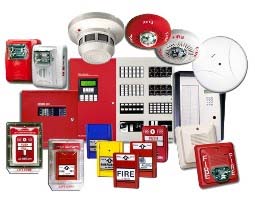
Suitable arrangements should be made in all buildings to give early warning in the event of fire. In most houses, the installation of smoke alarms together with heat alarms or automatic fire detection and alarm systems can significantly increase safety by automatically giving early warning of fire.
If houses are not protected by an automatic fire detection and alarm system in accordance with the relevant recommendations of BS 5839: Part 1 Fire detection and alarm systems for buildings, Code of practice for system design, installation, commissioning and maintenance and servicing to at least an L23 standard, or BS 5839: Part 6 Code of practice for the design, and installation and maintenance of fire detection and alarm systems in dwellings to at least a Grade DE type LD23 standard (with an additional smoke alarm in the principal/largest bedroom), they should be provided with a suitable number of smoke alarms installed in accordance with the guidance.
Smoke and heat alarms should be mains-operated and conform to BS 5446: Fire detection and fire alarm devices for dwellings, Part 1 Specification for smoke alarms; or Part 2 Specification for heat alarms. Components of automatic fire alarm systems for residential premises, Part 1 Specification for self-contained smoke alarms and point-type smoke detectors.
Fire detection and fire warning systems must be properly designed, installed and maintained, and installation and commissioning certificates should be provided. Third party certification schemes for fire protection products and related services are effective in providing full assurances.
Where a sprinkler system is recommended, it should be designed and installed in accordance with BS 9251 Sprinkler systems for residential and domestic occupancies - Code of practice and BS DD 252 Components for residential sprinkler systems - Specification and test methods for residential sprinklers.
Large houses (any storey exceeding 200m2) have their own fire detection and alarm requirements.
In terms of the possible effect of the revised Part B on cables and cable installations, Iain Collings, Senior Design Engineer, Applications Engineering at Voltimum Manufacturing Partner Prysmian said: "The situation concerning Part B is as follows. The draft document was issued a while ago, to which we made numerous comments. These are currently being reviewed for possible inclusion in the final document, but until that final document is issued to the public, we are not in a position to pass comment on any of its content".
For full information on all of the above, and on related power supplies, go to the Part P .PDF documents that form part of this VoltiBULLETIN.
Relevant contacts:
Contact: Eddie Taylor / Bernard Pratley
Lighting Industry Federation (LIF)
Tel: 0207 793 3020
Email: [email protected]
Web: www.lif.co.uk
Contact: Keven Kearney
(Technical Director)
The Lighting Association
Stafford Park 7, Telford, Shropshire TF3 3BQ, UK
Tel : +44 (0) 1952 290905
Fax : +44 (0) 1952 290906
Email: [email protected] / [email protected]
Web: www.lightingassociation.com