
























































-Promo-graphics.png?width=1280)
-Promo-graphics-(1).png?width=800)

Three-phase electrical supplies are commonplace in most industrial and commercial facilities for a wide variety of applications. Three-phase motors are widely used for many tasks. To guarantee the proper operation of electrical equipment, as well as the safety of workers, correct installation is essential.

Phase rotation basics
Phase rotation refers to the order in which the three phases of an alternating current (AC) system are connected. Phase rotation measurement is used to check the order in which these phases are connected. In the UK, the three phases are known as L1 (brown), L2 (black) and L3 (grey), where the peak of each AC signal is 120 degrees apart.
Getting the phase sequence wrong can have devastating consequences for plant and machinery, with serious implications for machine safety. From motors running backwards to cooling or lubricating systems underperforming, one wrong connection can lead to a major maintenance headache. It can disrupt operation, cause vast damage to equipment with all the expense that entails, and potentially injure the user. Correctly testing the phase rotation of the electrical infrastructure is crucial.
Phase rotation testing
Good-quality, safe instruments that test which way the phases are rotating will inform the operator of the correct connection order for proper motor rotation. This can help to ensure that the system is connected and functioning properly and that it is safe for use. Specific test equipment is available to help verify the phase rotation of three-phase circuits, and Martindale Electric has a range of solutions to choose from.
Non-contact testing
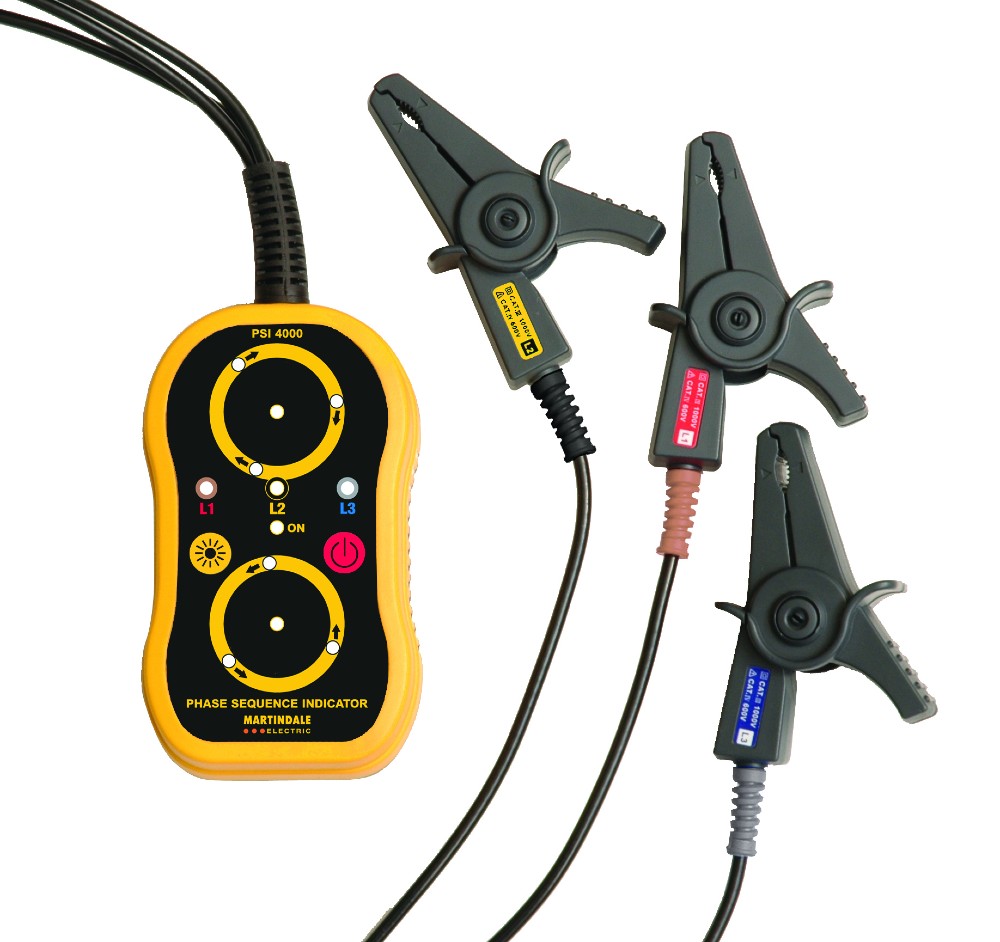
An ideal solution from a safety point of view are Martindale Electric’s battery-operated PSI4000 and PSI4300. These are non-contact phase sequence indicators, as the insulated clips work by induction and can take a reading through the insulation of each phase conductor, thereby reducing the risk of coming into contact with live parts. Simply connect the colour-coded clips in the L1, L2, L3 order and turn the instrument on.
The LEDs provide a clear indication of phase rotation and have a high-intensity setting for working in strong ambient light. The LEDs also show whether each line conductor has a voltage of between 75 and 1000 volts AC at 45-65 Hz. A buzzer also provides an audio indication of correct sequence. The PSI4000 provides a correct indication for clockwise sequence, as used in the building facilities industry, while the PSI4300 provides a correct indication for anticlockwise sequence as used, for example, in power utilities. Both will also work on uninsulated conductors.
Direct-connection testing
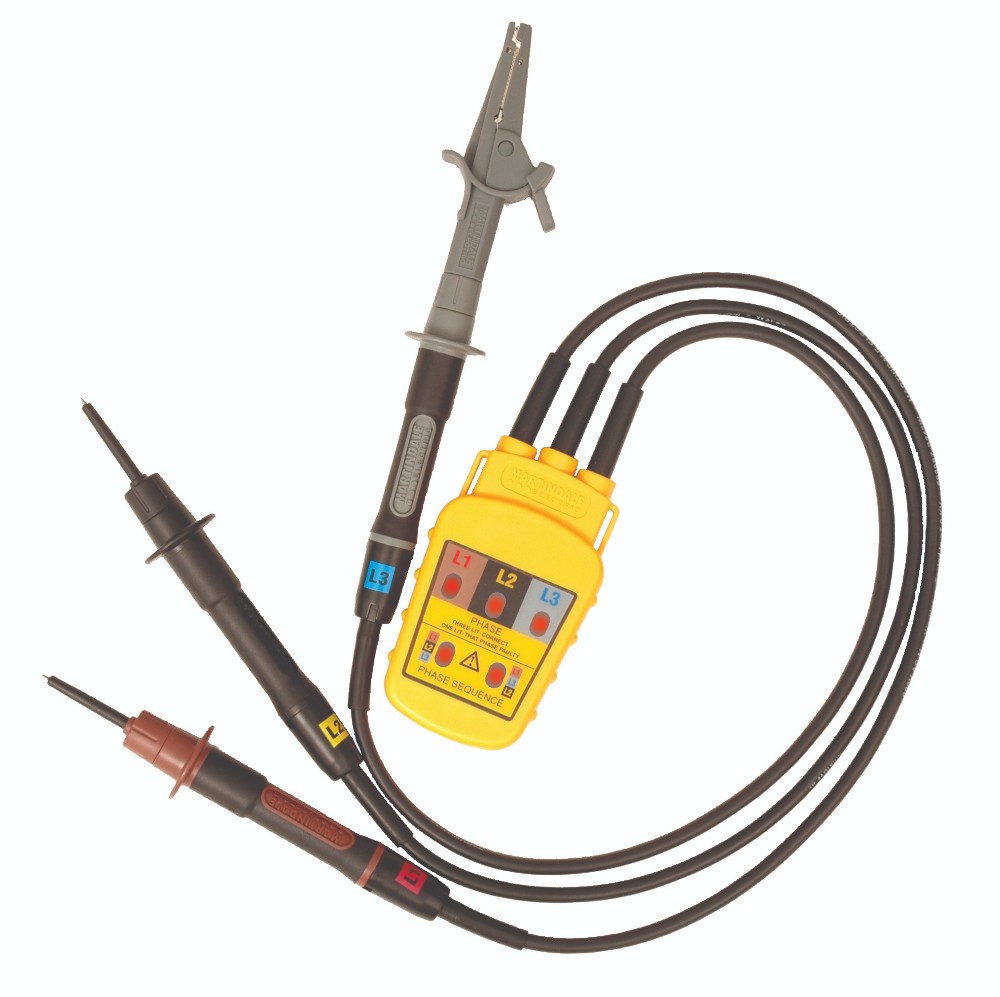
Another solution is the PC15250 phase rotation indicator, which has been specifically designed to quickly and simply prove the presence of all three live phases (or identify which are faulty) and show the sequence of phase rotation when all three phases are confirmed as present. Easy to operate, the PC15250 provides a fast, effective, battery-free method of identifying unmarked cables and ensures that three-phase outlets and machines are wired correctly.
Accurate installation and connection of three-phase electrical systems is crucial for both commercial and industrial buildings, but with simple test tools to verify the installation, costly maintenance issues can be avoided.
With over 95 years of experience in electrical safety, Martindale Electric is one of the most trusted names in the industry delivering and supporting a wide range of test, measurement and safe isolation solutions.
See more from Voltimum on Google
Add Voltimum as a preferred source and Google will show our articles more often in your news results.