













































-Promo-graphics-(2).png?width=1280)
-Promo-graphics-(1).png?width=800)

Ensuring electrical installations meet the latest BS7671 Amendment 4 fire safety requirements requires innovative cable management solutions that deliver compliance, speed, and long-term circuit integrity.

Understanding BS7671 Amendment 4 Fire Safety Requirements for Cable Support Systems
BS7671, the UK's IET Wiring Regulations, sets the standard for electrical installation safety across all sectors. Amendment 4 introduced critical updates that directly impact how electrical contractors approach cable support and fixings, particularly concerning fire safety and system integrity. These regulations emphasise the importance of maintaining circuit continuity for emergency systems during fire events, requiring cable support solutions that can withstand elevated temperatures while preserving mechanical integrity.
The amendment clarifies requirements for cable management in fire evacuation systems. Emergency lighting circuits, fire alarm installations, and smoke control systems must maintain operational capability during fire conditions to ensure safe building evacuation. This necessitates cable support systems that resist fire spread, maintain load-bearing capacity under thermal stress, and prevent cable displacement that could compromise circuit integrity.
Electrical contractors must verify that cable support products meet specified fire performance standards. Non-compliant fixings can contribute to fire propagation through combustible materials, generate toxic smoke, or fail mechanically when exposed to elevated temperatures. Amendment 4 establishes that cable support systems form an integral component of fire safety infrastructure, requiring the same rigorous specification and verification as other fire-rated building elements.
How Fire-Rated Cable Fixings Maintain Circuit Integrity During Emergency Conditions
Fire-rated cable fixings serve a critical function beyond routine cable management—they ensure that essential circuits remain operational when they are needed most. During fire events, temperatures can exceed 800°C within minutes. Standard fixings often fail under these conditions, allowing cables to sag, contact ignition sources, or experience mechanical stress that severs conductors. Fire-rated solutions maintain structural integrity throughout the duration of fire exposure, preventing cable movement and preserving electrical continuity.
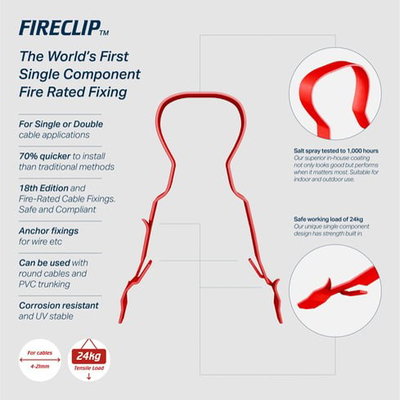
The LINIAN FireClip exemplifies this engineering approach through its single-component non-combustible design. Tested and certified to BSi and DIN standards, the FireClip maintains cable support during fire exposure without generating smoke or toxic gases. This performance characteristic directly addresses BS7671 Amendment 4 requirements for cable support systems in emergency circuits. The non-combustible construction eliminates the risk of contributing to fire load, whilst the maintained load-bearing capacity ensures cables remain securely positioned throughout the fire event.
Circuit integrity extends beyond the immediate fire event. Fire-rated cable fixings prevent secondary failures that occur when cables drop onto hot surfaces or become entangled with other services. For emergency lighting, fire alarm panels, and smoke extraction systems, continuous operation during evacuation periods can be the difference between safe egress and catastrophic outcomes. Specifying certified fire-rated cable support systems demonstrates compliance with current regulations whilst fulfilling the duty of care expected of professional electrical contractors.
Single-Component Fire-Rated Solutions That Transform Installation Speed and Safety
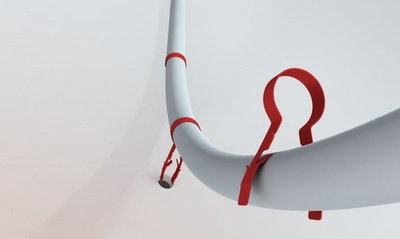
Traditional cable support methods typically require multiple components—plugs, screws, washers, and conduit saddles—creating complex installation sequences that consume time and increase potential failure points. Single-component fire-rated solutions fundamentally transform this approach by integrating fire performance with installation efficiency. The LINIAN FireClip eliminates the need for separate fastening components, reducing installation time by up to 70% compared to traditional methods whilst maintaining full compliance with fire safety requirements.
Installation speed directly correlates with project economics and site safety. Working at height presents inherent risks, and extended installation times increase exposure to these hazards. One-handed installation capability allows contractors to maintain secure positioning on ladders or scaffolding whilst installing cable fixings with precision and control. This approach eliminates the need for hammering or excessive force, reducing the risk of substrate damage and ensuring consistent fixing pressure across all installation points.
The single-component design also simplifies project logistics significantly. Electrical contractors can reduce the range of consumables required on site, minimising inventory management complexity and reducing the likelihood of missing components that delay project completion. For projects requiring hundreds or thousands of cable fixings, these efficiency gains compound substantially. The combination of fire-rated performance with rapid installation methodology allows contractors to meet compliance requirements without compromising project timelines or installation quality.
Technical Certification Standards Every Electrical Contractor Should Verify
Compliance verification should be supported by appropriate independent testing and recognised certification. For fire-rated cable support systems, relevant BSI and DIN fire classifications provide an indication of performance under fire conditions, including factors such as fire resistance, combustibility, smoke generation and emissions.
The LINIAN FireClip carries relevant BSI and DIN classifications and is supported by technical documentation for project and compliance requirements. Specifying products with appropriate independent certification can help contractors demonstrate suitability and support quality assurance during installation and inspection.
For projects requiring fire-rated cable support, the relevant certification and classification should be considered as part of the product specification and procurement process.
Reducing Project Complexity While Achieving Professional Cable Management Outcomes
Professional cable management extends beyond regulatory compliance to encompass installation quality, system maintainability, and long-term reliability. Fire-rated cable fixings contribute to these outcomes by providing secure, consistent cable positioning that facilitates fault-finding and system modifications. Clean, professional cable routing reflects installation quality and supports efficient maintenance operations throughout the building lifecycle. The LINIAN FireClip accommodates various cable sizes, reducing the need for multiple fixing types and simplifying specification decisions.
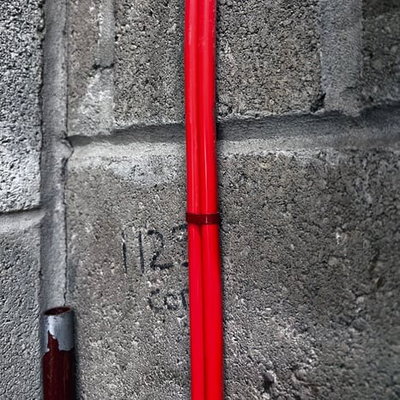
Project complexity increases exponentially when multiple product types are required for different substrates, cable sizes, and performance requirements. Single-component solutions that perform across diverse installation conditions reduce this complexity substantially. The FireClip installs into brick, plaster, wood, and other common substrates without requiring different fixing methods or components. This versatility streamlines installation planning and reduces the risk of specification errors that necessitate costly site modifications.
Long-term system performance depends on initial installation quality and the durability of cable support components. Corrosion-resistant and UV-stable fixings maintain mechanical integrity in outdoor and harsh indoor environments, preventing premature failure that compromises cable security. Easily removable and reusable fixings support system modifications without substrate damage, facilitating maintenance operations whilst preserving building fabric. For electrical contractors, these characteristics translate to reduced call-back risks and enhanced reputation for quality workmanship. Fire-rated cable support solutions like the LINIAN FireClip demonstrate how compliance requirements and installation efficiency can align, delivering projects that meet current regulations whilst establishing foundations for reliable long-term performance.
See more from Voltimum on Google
Add Voltimum as a preferred source and Google will show our articles more often in your news results.