
























































-Promo-graphics-(2).png?width=1280)
-Promo-graphics-(1).png?width=800)


The rapid adoption of electric vehicles (EVs) has driven significant changes in electrical installation design, particularly in relation to safety and protection. Unlike traditional loads, EV charging introduces power electronics, DC components, and complex fault conditions that must be managed to prevent electric shock and fire risk.
One of the most critical protective measures in EV charging installations is the Residual Current Device (RCD). However, not all RCDs are suitable for EV charging applications. This article explains the operating principles of EV charging systems and provides an overview of the different RCD types involved, their limitations, and where each should be applied.
Overview of EV Charging Systems
EV charging points, formally known as Electric Vehicle Supply Equipment (EVSE), are classified into charging modes defined by IEC 61851 and referenced in BS 7671:
Mode 1 – AC charging from a standard socket (rare and discouraged)
Mode 2 – Portable charger with in-cable protection device
Mode 3 – Dedicated AC EV charger (wall box)
Mode 4 – DC fast charging (off-board rectification)
Most domestic and commercial AC installations use Mode 3 charging, where the charger contains load monitoring, fault monitoring, and communication with the vehicle. EVs can produce smooth DC residual currents, which directly influence RCD selection.
RCD Selection Amendment 4
BS 7671: 722.531.3.101 recognises the following RCD formats:
RCCBs, RCBOs, CBRs and RDC-PDs provide protection through isolation of the electrical supply, in the event of a residual current fault that results in the device tripping or being manually switched off.
RCCB (BS EN 6008-1) must be used in conjunction with a separate OLPD i.e. it must be protected against the effects of overcurrent using fuses and or MCBs.
RCBO (BS EN 6009-1) in addition to residual current protection it also provides overcurrent protection.
RCCBs and RCBOs have fixed characteristics and in the event of a fault, are designed to be reset by ordinary persons.
CBR (BS EN 60947-2) Circuit breaker with a built-in residual current protection feature, for use in higher current applications > 100A.
CBRs may have adjustable characteristics and in the event of a fault, are not designed to be reset by ordinary persons.
Clause 722.531.3.101 also refers to BS EN 62423; additional design requirements for RCCBs, RCBOs and CBRs suitable for detecting Type F or B residual currents.
RDC-PD combines RCD and RDC-DD together to understand the difference read on.
Residual Current Device Types Explained
Type A RCDs, these can detect Sinusoidal AC residual currents and Pulsating DC residual current.
Type A RCDs are commonly used in mode 3 EV charging when supplemented by a device that limits DC leakage to below 6 mA. See BS 7671 722.531.3.101 (b) and (c)
Type A RCD with 6 mA DC Detection (RDC-DD)
Many mode 3 EV chargers incorporate a Residual Direct Current Detecting Device (RDC-DD). These Monitor DC leakage current and shutdown if smooth DC exceeds 6 mA. The RDC-DD contains contactors or relays that do not meet the requirements for isolation hence the reason why BS 7671 refers to the use of RCDs or RCD PD upstream. This Prevents upstream Type A RCD from becoming saturated, the advantages of this is a cost-effective solution that complies with BS 7671: Regulation 722.531.3.101
RDC–PD (Protection Device) Incorporates 6 mA smooth DC detection and 30 mA Type A or F residual current protection in the same device. The RDC-PD contacts electrically isolate the circuit in the event of a residual current fault.
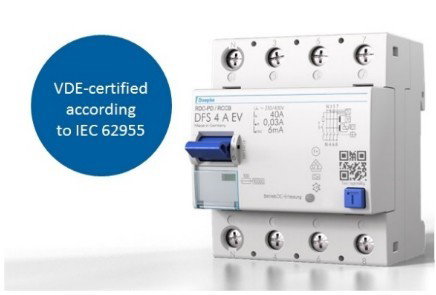
RDC-PDs are designed for inclusion in the circuit feeding the charge point if the Mode 3 charge point does not include an RDC-DD combined with an RCD.
RDC-PDs are suitable for new installations and upgrading existing installations to the latest safety requirements for EV charging.
Type B RCD, these can detect residual currents, Pulsating DC, Smooth DC and Mixed-frequency residual currents. Fully compliant with all EV charging scenarios. Typical Applications would be Installations without RDC-DD protection in the charger, Mode 4 with one or more charge points, Mode 3 + RDC-DD 6 mA with 2 or more charge points, Mode 3 no RDC-DD with one or two charge points.
Type B RCDs offer the highest level of protection and are often specified where charger internal protection cannot be verified and remain the most robust and universally applicable solution, particularly in commercial and DC charging environments.
Fig 1 details the requirements for the upstream RCD, based on BS7671 722.531.3.101 Note 1 and Regulation 531.3.3; the charging mode, charge point design, Type of RCD and Number of charge points connected to the feeder circuits containing upstream RCDs.
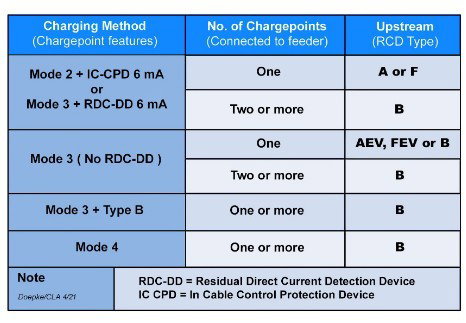
Fig 1 RCD Selection 722.531.3.101 Note 1 and Regulation 531.3.3
Conclusion
Check the EV Manufacturer’s information for specific RCD requirements. Check the charge point specification to verify the exact features provided in that version and any additional equipment required to meet the revised requirements in BS 7671 AMD 4.
Under BS 7671:2018 AMD 4 2026, EV charging installations must comply with Regulation 722.531.3.101, which states that: DC residual current exceeding 6 mA must not impair RCD operation. This may be achieved by: B Type RCD, or A Type RCD combined with
RDC-DD (IEC 62955) or RDC-PD. In addition, each EV charging point must have: Individual RCD protection. Open PEN protection (TN-C-S systems), Suitable overcurrent protection and isolation.
Written by Martin Plumbridge – TMIET, Doepke Technical manager.
See more from Voltimum on Google
Add Voltimum as a preferred source and Google will show our articles more often in your news results.