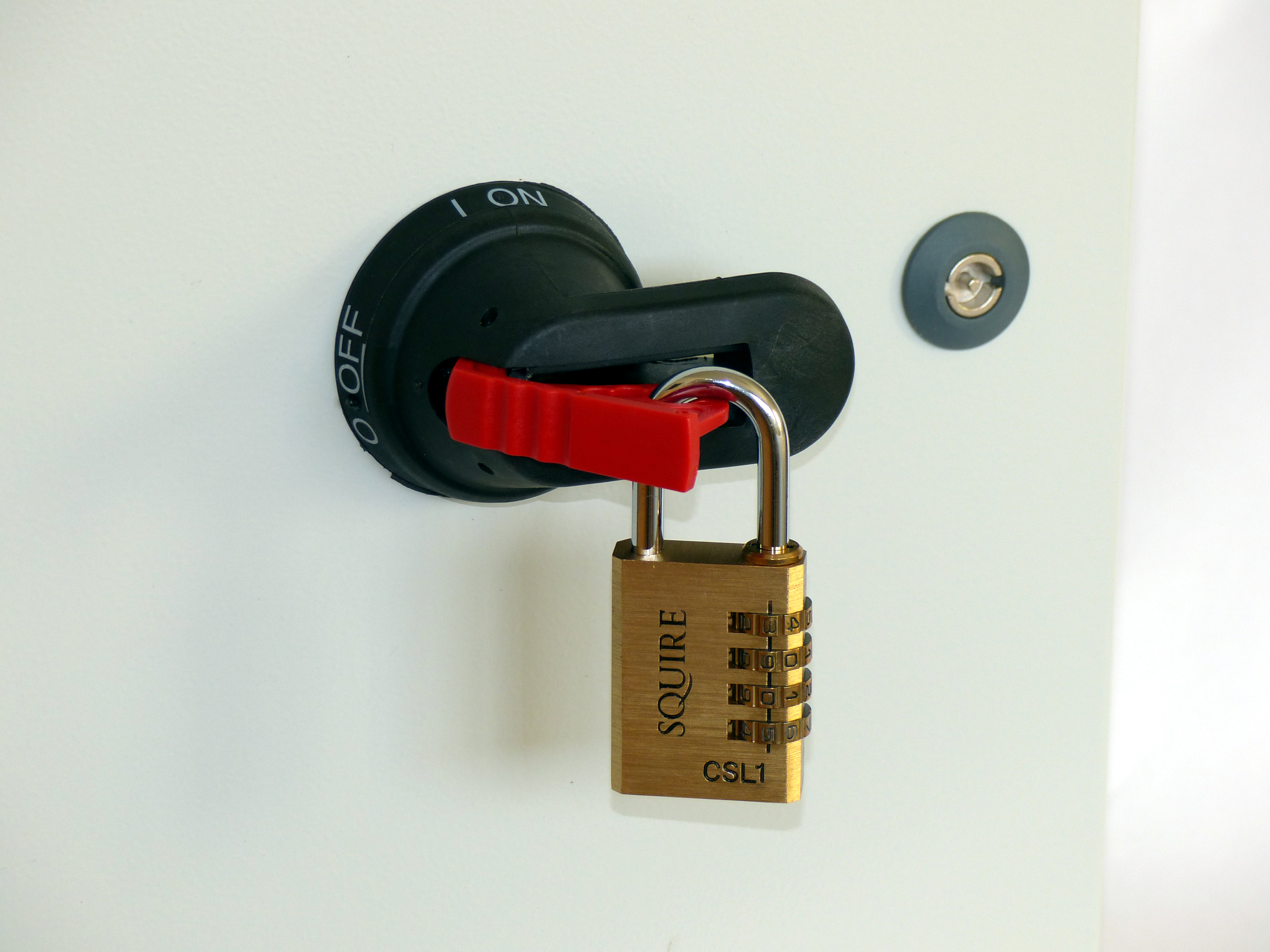
Distribution switchgear to BS EN 60947-3 defines the requirements for low-voltage switchgear and control gear, specifically: switches, disconnectors, Switch-disconnectors and switch-fuse disconnectors. For Example, this applies to equipment used in distribution circuits and motor circuits up to 1000 V AC.

Types of Distribution Switchgear:
Switch-fuse-disconnector
These integrate a switch-disconnector and fuse holders, allowing load switching, overcurrent protection and safe isolation.
Functions: Making and breaking load current, Overcurrent and short-circuit protection via fuses, safe isolation with visible or verifiable separation e.g. positive indication of contact position.
Characteristics: Typically fitted with NH or BS88 fuse links, lockable in the off position for maintenance safety, Suitable for AC-22 or AC-23 duties depending on rating, provides discrimination through fuse selection.
Switch-disconnector
These combine the functions of a switch and disconnector capable of load switching and providing safe isolation.
Functions: On-load switching (subject to utilisation category), isolation of circuits for safety and maintenance.
Characteristics: Rated according to utilisation categories AC-21, AC-22, or AC-23. May incorporate visible isolation or mechanically linked contacts, lockable handles are common, typically installed upstream or downstream of protective devices.
Switches
These are mechanical switching devices capable of making, carrying and breaking current under defined circuit conditions. Depending on their utilisation category, they may or may not be suitable for on-load switching.
Functions: Routine switching of circuits, operational control.
Characteristics: Load breaking capacity depends on utilisation category, does not provide isolation i.e. see switch disconnector. Not all switches are suitable for breaking inductive loads.
Disconnectors
Designed for circuit isolation. A disconnector must provide positive indication of contact position or verifiable air gap so circuits can be safely worked on.
Functions: Safe electrical isolation, protection of personnel during maintenance
Characteristics: Not designed to make or break load current, provides visible or verifiable isolation, typically rated AC-20 (isolation only), often lockable to prevent inadvertent operation.
Utilization categories to BS EN 60947-3
BS EN 60947-3 defines utilisation categories which describe the type of load and duty under which a switch, disconnector, or switch-disconnector is designed to operate. These categories are critical for correct product selection and compliance with BS 7671.
AC-20A / AC-20B – Isolation Only.
Function: Isolation of a circuit without making or breaking load current.
Characteristics: Devices are not intended to switch load current, operation must only take place when the circuit is off-load, designed to provide safe isolation with visible or verifiable separation.
Applications: Maintenance isolation points, lockable isolators upstream of protective devices, circuits were switching under load is prevented by design. Note: Using an AC-20 device for on-load switching would be non-compliant and potentially unsafe.
AC-21A / AC-21B – Switching of Resistive Loads
Function: Making and breaking resistive or slightly inductive loads. Load Type: Heaters, Incandescent lighting, low inductance circuits.
Applications: Heating circuits, general resistive distribution loads, control panels with stable load conditions. This category represents light switching duty. Electrical Characteristics: Low inrush current, minimal arcing compared to inductive loading.
AC-22A / AC-22B – Switching of Mixed Resistive and Inductive Loads
Function: Making and breaking mixed resistive and inductive loads, including moderate overload conditions. Load Type: Distribution boards, Transformers (lightly loaded), Mixed panel circuits.
Electrical Characteristics: Moderate inrush current, higher breaking capacity required than AC-21, Typical duty for distribution switchgear. Most common category for main switches in low-voltage installations.
AC-23A / AC-23B – Switching of Highly Inductive Loads
Function: Making and breaking highly inductive loads, including motor loads.
Load Type: Motors, motor feeders, large solenoids, high inductance devices. Electrical Characteristics: Very high inrush currents, significant arcing during breaking, mechanically and electrically demanding duty.
Applications: Motor isolators, duty switches for motor circuits, industrial production equipment. Required where a switch is expected to break full motor load current and occasional locked rotor current.
Meaning of “A” and “B” Suffixes. A: Frequent operation, normal service duty. B: Infrequent operation or emergency duty. This relates to endurance testing and operational expectation.
Selection Guidance, isolation only AC-20, resistive loads AC-21, distribution / mixed loads AC-22, motors / inductive loads AC-23
Note:
BS7671 462.1.201: A main linked switch or linked circuit-breaker shall be provided as near as practicable to the origin of every installation as a means of switching the supply on load and as a means of isolation.
For selection refer to BS 7671 table 537.4
Written by Martin Plumbridge – TMIET, Doepke Technical manager.